At the wonderful The Catholic Thing you will find an opinion piece by a priest writing under a penname (to avoid the Eye of Sauron as is only correct). The piece is entitled “The ‘Polar Unity’ of the Two Forms of the Roman Rite”. The writer is “a North American priest who teaches in a seminary, does parish work, and celebrates both forms of the Roman rite”.
The article has strengths and weaknesses.
Here is the precis.
The writer argues that Benedict XVI’s distinction between the Ordinary Form and Extraordinary Form should be understood not merely juridically or pastorally, but theologically, as a “polar unity” within the one Roman Rite. Its core claim is that the two forms are not rival rites, but complementary expressions of one lex orandi, consistent with Benedict’s broader “hermeneutic of reform in continuity.” To defend this claim, the writer uses Hans Urs von Balthasar’s distinction between the Marian and Petrine dimensions of the Church: Marian meaning contemplative, receptive, bridal and the Petrine meaning apostolic, juridical, governing. He proposes that the Extraordinary Form tends to embody the Marian accent of the Church: silence, adoration, ritual density, transcendence, and the primacy of divine action. He says the Ordinary Form tends to embody the Petrine accent: intelligibility, proclamation, pastoral accessibility, missionary outreach, and audible participation by the faithful. Both forms contain both dimensions, but each gives one accent greater visibility. On this reading, Benedict’s aim in allowing both forms was to preserve the Church from reductionism, that is, the Roman Rite should not be flattened into either pure sacral reserve or pure pastoral functionality. The writer says the two forms could “mutually enrich” one another in that the Ordinary Form could recover sacrality and silence while the Extraordinary Form could benefit from more scripture readings and pastoral attentiveness. He says that liturgical authority remains Petrine, but authority should serve liturgical memory and mystery rather than erase them. His conclusion is that the coexistence of the two forms symbolizes the Church’s refusal to eliminate fruitful tension. Contemplation and mission, silence and proclamation, gift and governance belong together in Catholic worship.
He ignores the miserable effects of Francis and his mandarins and doesn’t mention Traditionis custodes, a kind of damnatio memoriae. They don’t really exist in the article except in between the lines, that is, Francis made things so bad that something must be done. That might be a weakness in the article… or a strength, depending on the level of disdain one has for and opinion of the validity of the 2021 legislation.
The article is thoughtful and plainly animated by a desire for peace. That is welcome. Its weakness is that it depends more on a speculative framework than on demonstrated liturgical reasoning.
Its central move is to interpret the two forms of the Roman Rite through, as mentioned above, a Balthasarian polarity, assigning one a Marian/contemplative accent and the other a Petrine/pastoral one. Such categories might spur some reflections, yet they can also be so broad that they explain almost anything. I think the writer would have to establish from the texts, rubrics, history, and theological content of the orations of the two missals that one is predominately Marian and the other Petrine. He asserts it, but does not demonstrate it. I grant that he wasn’t offering a monograph: TCT has a word limit of about 1000, after all. The writer also admits that both rites have both dimensions to some extent.
The article succeeds as a meditation and as an appeal for charity. It is less persuasive for understanding the two missals through this two-fold lens.
The piece tends to idealize both forms by describing them according to their best intentions rather than their actual historical performance. The Ordinary Form is presented as envisioned by Sacrosanctum Concilium and celebrated “according to the mind of the Church,” which is fair enough. However, that shields the argument from the practical objections that usually emerge in post-Conciliar liturgical debates, such as the massive failure of the Novus Ordo to support all the sectors of the Church’s life as demographics and other indicators plainly show. The result is that the article risks being true at the level of aspiration while sidestepping the empirical questions.
From my point of view, when the Novus Ordo is celebrated more according to the Roman liturgical tradition, the better it is. Of course that begs the question: Why not just use the Vetus Ordo, if that is the case. The writer is trying to get at the “why” with his Balthasarian categories. Moreover, I think the “mutual enrichment” of the people in the pews tends to go mostly in one direction. Once people get the Novus Ordo in a more traditional celebration, they then will migrate over to the Vetus Ordo, just as the young graduate from lesser to more complicated and nourishing food.
This is a good contribution to those who are well-informed and able to discuss these matters thoughtfully.















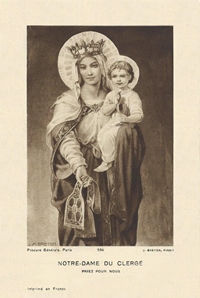



The problem with the original article, as you note, Father, is that it relies on assertion rather than on demonstration: and the assertion is manifestly false. The author’s claim is that the ancient liturgy was deficient in the realm of mission, evangelization, and motivation of the whole body of the faithful to accomplish the works of the Church. So deficient, in fact, that a wholly-reworked liturgy was useful and perhaps even necessary to accomplish these goals.
But, I challenge: what was the missal brought by Augustine to Canterbury in 597 AD? Or the Mass said by Boniface when he crossed over to preach to the Frisians? What liturgy was attended by the new converts of the ever-expanding limites of Christian Europe in Bohemia, Poland, Lithuania? What liturgy sustained the efforts of Francis Xavier, Matteo Ricci, Jean de Brebeuf? What ecclesiastical environment prevailed during the long and fruitful ages when great lights like Catherine of Siena and John of God founded hospitals and schools?
So much for the positive account of the ancient Roman liturgy. But someone might counter: “Isn’t it possible that the New Mass has benefited all these efforts?” A priori, perhaps it’s possible. But I don’t think it’s reasonable to hold, given the evidence of the last half century, that the Novus Ordo has brought material improvement to the Church’s missionary work and engagement of the faithful. On the contrary: almost every metric that has been studied shows a precipitous and calamitous decline.
As you say, Father, the “enrichment” all seems to flow in one direction.